The Challenge
Can we build a machine capable of making major scientific discoveries with high autonomy?
After 30 years of pioneering systems biology, Hiroaki Kitano argues that the future of science belongs to a new kind of researcher: a highly autonomous Artificial Intelligence, working in tandem with humans to solve the world's most complex problems.
Over three decades ago, Hiroaki Kitano helped create systems biology—a field aimed at understanding biological systems holistically rather than through reductionism. The vision was ambitious: large-scale, high-precision mechanistic models that could predict and explain life itself.
The field flourished with thousands of researchers, international societies, and dedicated institutions. Yet the reality fell short. Instead of the envisioned comprehensive models, the field produced fragmented small-scale models or large-scale statistical approximations.
"After 30 years of effort, I'm fully convinced that systems biology is a scientific field for artificial intelligence and human hybrid systems, rather than human scientists trying to understand by itself."
— Hiroaki Kitano
But the reality fell short of that vision. What emerged were fragmented small-scale models or large statistical approximations. Large-scale, high-precision mechanistic models remain unrealized. This reality revealed not the limitations of the field, but the fundamental limits of human cognitive capacity itself.
Every year, over 2 million papers are published in biomedical fields—thousands per day in areas like oncology and neuroscience. Reading them all is impossible, and predicting which will prove important is beyond human capability.
"We feel we know a lot because of data and publications which we face every day, but in reality we are navigating in the darkness."
— Hiroaki Kitano
Fifteen years ago, Kitano's team spent months creating a molecular interaction diagram for yeast cell cycle by reading over 2,000 papers. It became the gold standard but was never updated—the cognitive burden is simply too great.
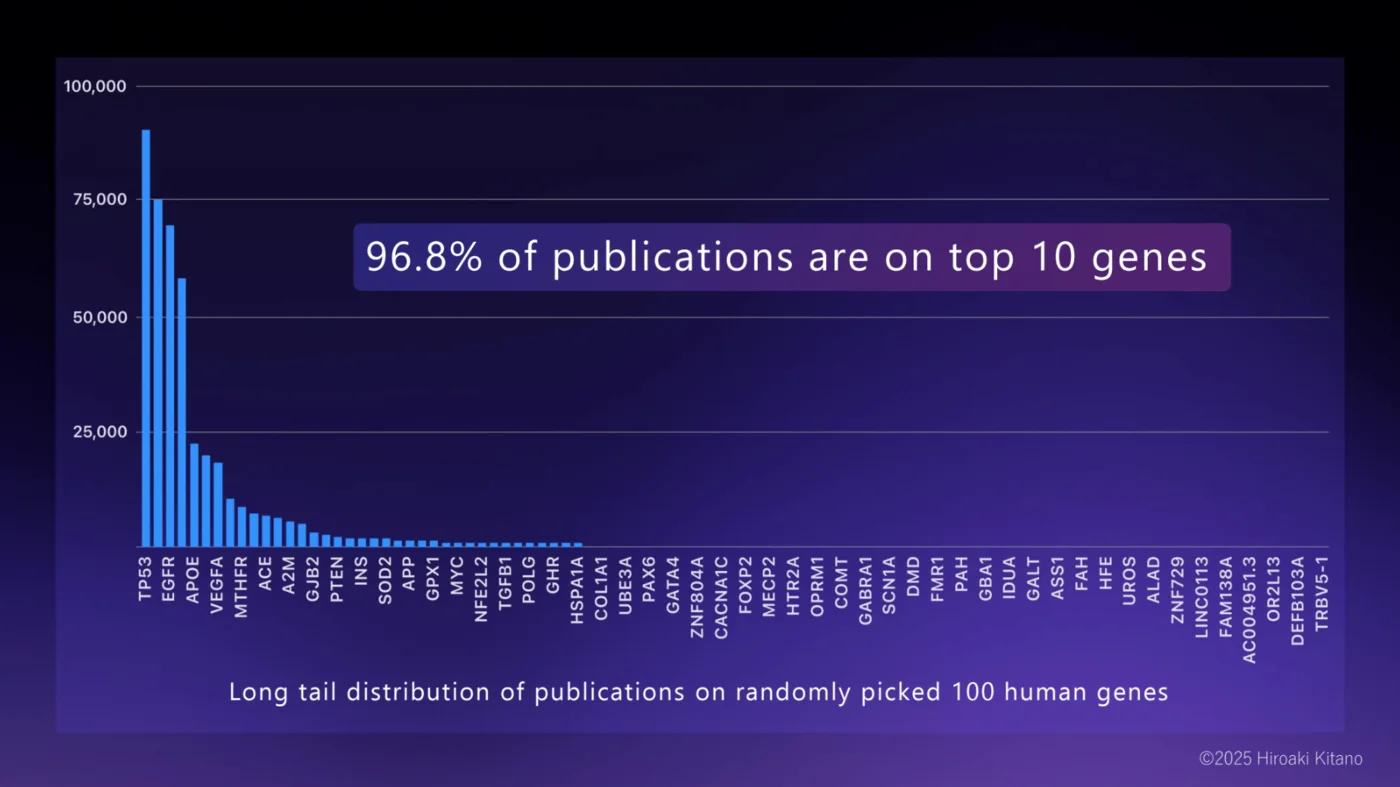
Scientists naturally focus on genes that appear important, creating extreme research bias. Yet breakthroughs often emerge from this "long tail"—like the Trem2 gene, which had no publications a decade ago but is now recognized as critical in neurodegenerative disease, with thousands of papers published annually.
The Nobel Turing Challenge aims to develop a highly autonomous AI scientist capable of continuously making major discoveries—some worthy of a Nobel Prize and beyond. The "Nobel" reference is a benchmark for discovery caliber, not the goal itself.
Can we build a machine capable of making major scientific discoveries with high autonomy?
Will it behave like the best human scientists, or reveal an entirely new form of intelligence and scientific process?
Kitano personally bets on the latter—that AI will show a very different kind of intelligence.
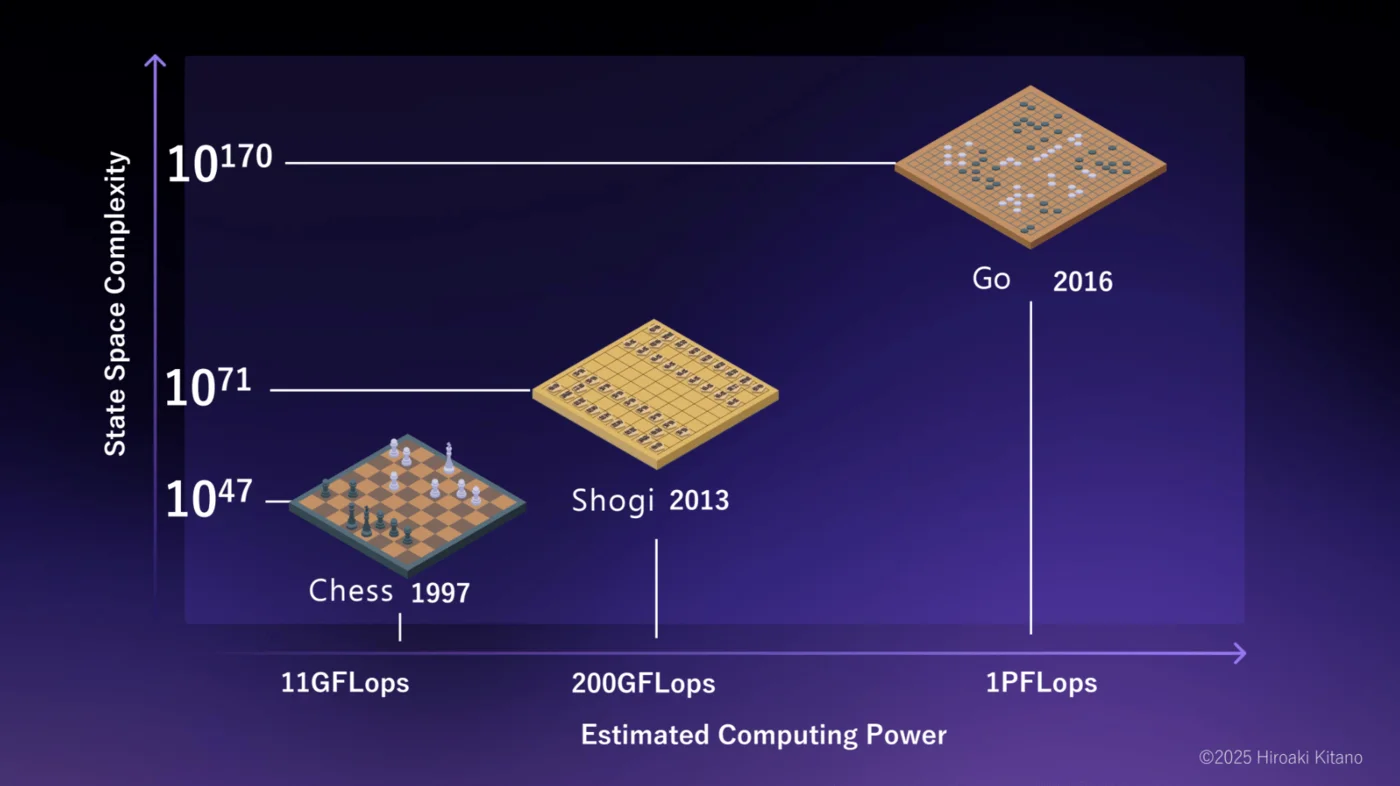
AI has historically been driven by grand challenges: computer chess, shogi, and Go. Each success relied on three fundamental principles: massive data, massive computing power, and proper AI architecture.
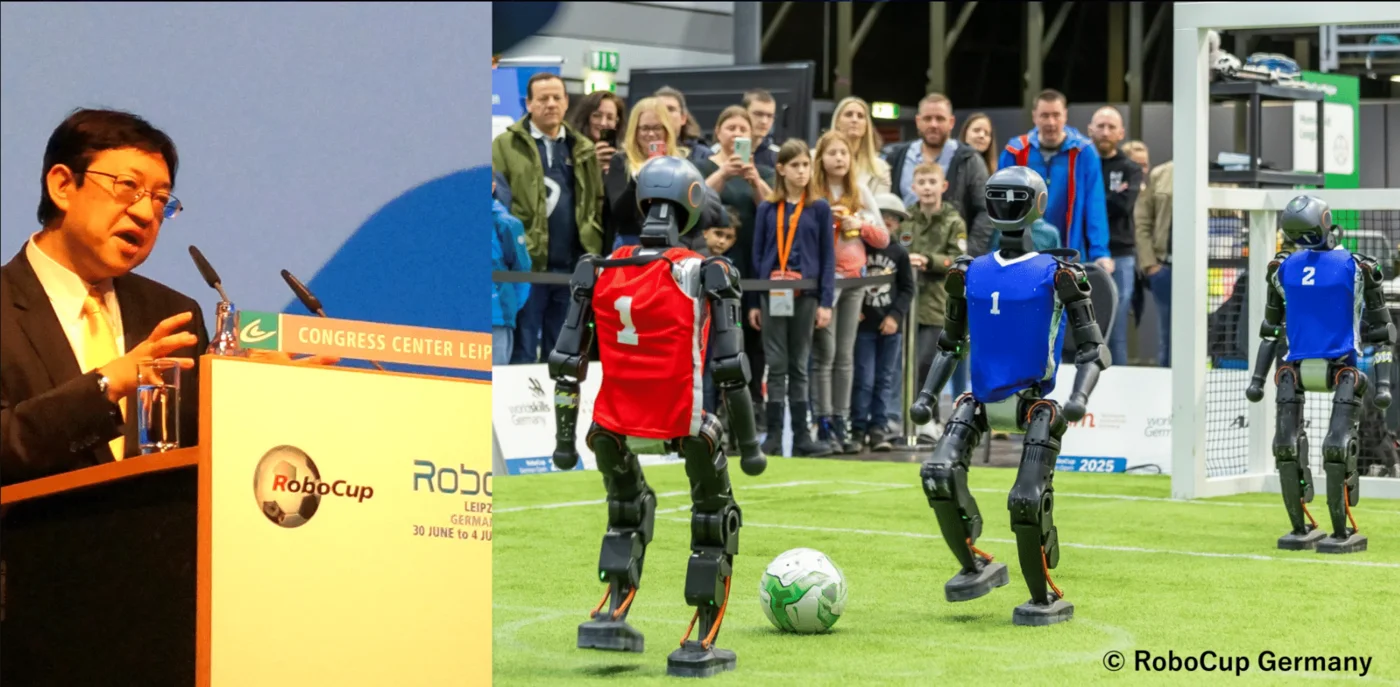
In the 1990s, Kitano created RoboCup—a challenge to develop autonomous humanoid robots capable of defeating the World Cup champions by 2050. This challenge brought together thousands of researchers and produced significant breakthroughs, including the Kiva system, later acquired by Amazon and transformed into Amazon Robotics.
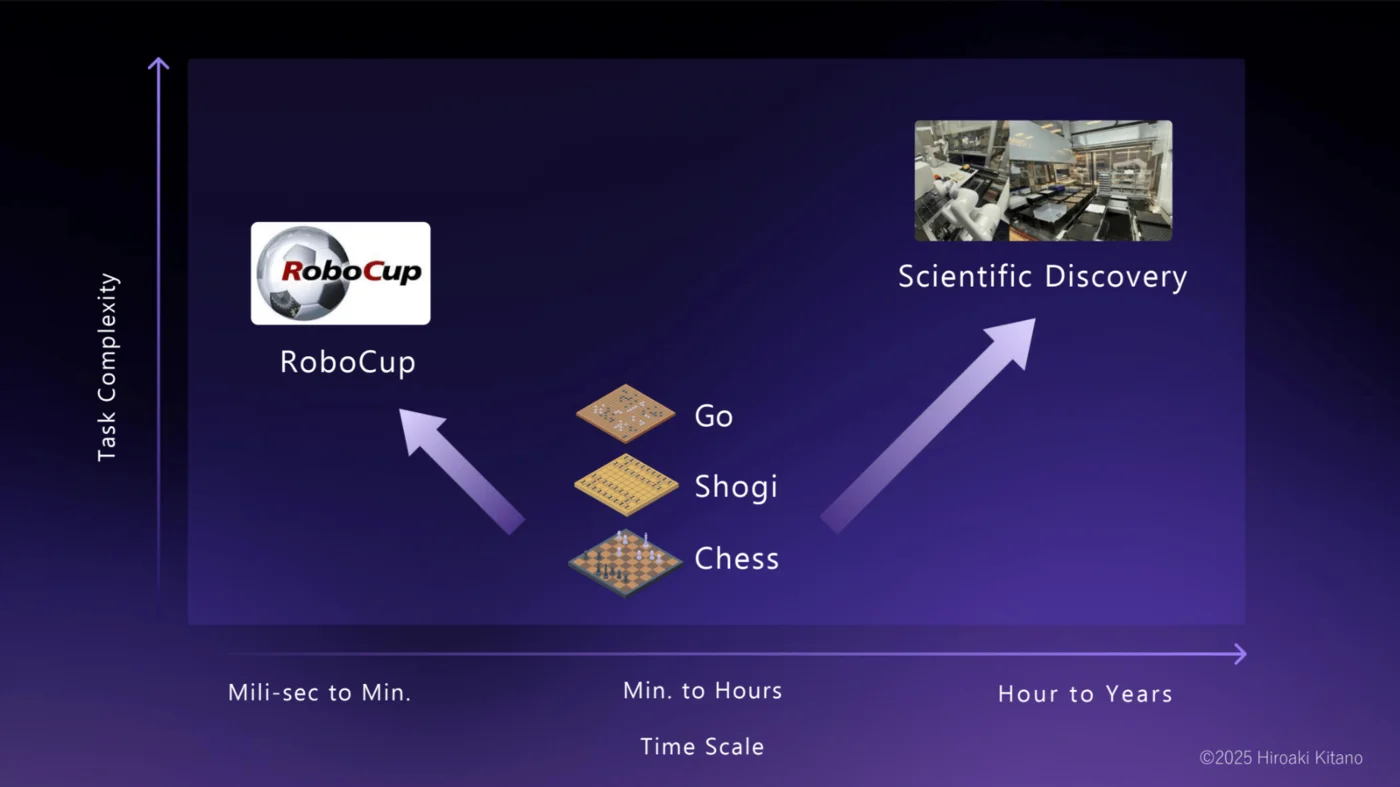
"All of them will be solved by three principles: massive data, massive computing, and proper AI architecture."
— Hiroaki Kitano
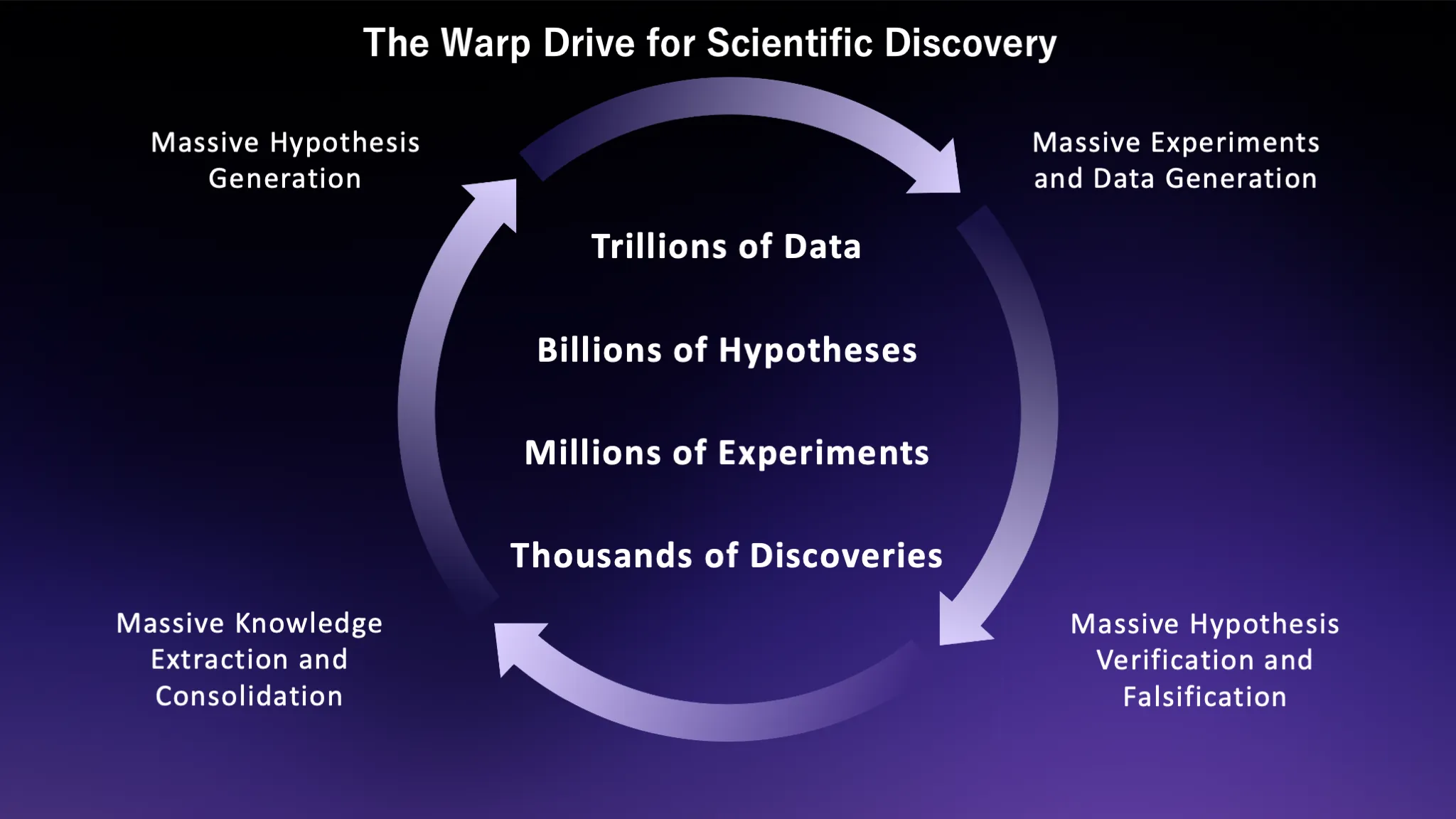
Human scientists typically generate one or two hypotheses, betting these will unlock mysteries of the universe. AI transforms this cycle into something unprecedented: instead of a handful of hypotheses, it can search through the entire hypothesis space, generating vast numbers of logically consistent hypotheses and systematically planning experiments to verify each one.
Trillions of Data Points
Billions of Hypotheses
Millions of Experiments
Thousands of Discoveries
This is the "warp drive" for scientific discovery—massive knowledge extraction, massive hypothesis generation, massive experimentation, and massive verification, all operating continuously and autonomously.
To run millions of experiments, robotic systems must operate continuously with high precision, executing AI-designed protocols without human intervention. On the island of Okinawa, Kitano's team created an end-to-end automation system for metagenome analysis—an early prototype featuring liquid handlers and arm manipulators that perform all steps automatically.
Plans are underway to extend this automation to metabolomics, epigenetics, and other experimental domains, working toward comprehensive coverage of all possible experiments. This ambitious vision requires global collaboration across institutions and disciplines to develop and standardize the diverse range of protocols needed for truly universal automated discovery.
Watch the MANTA automated laboratory demonstration in the video above (starts at 11:58, approx. 2 minutes)
Scroll to VideoLearn more about the MANTA Project: OIST Press Release →
AI Scientist will ask every question and important answers may be there to be discovered
Asking the right question is critical for human scientists working within a 30-year career with limited resources—you must bet on specific questions. But AI operates differently.
While resource limitations still exist, AI can explore the entire question space, investigating areas humans would consider unimportant that may prove profoundly significant.
This represents a fundamental paradigm shift in how science operates. AI enables exploration of a vastly wider search space, uncovering connections invisible to human cognition. As these capabilities expand, AI will increasingly connect distant dots in the landscape of knowledge, revealing relationships and principles beyond current human understanding.
Human Scientists
One or two carefully chosen hypotheses
Betting on specific questions within a 30-year career
AI Scientists
Every possible question explored
Universal exploration without cognitive bias
This is a total flip of the way we do science